It’s 9/12 today and I am at a loss for words every year about the humbling sacrifice 343 of my counterparts made in the line of duty on that fateful day 21 years and a day ago. I’ll always remember vividly as I watched the scene unfold early on September 11, 2001 with my father. At the time, he was a newly promoted captain with SDFD. As I was getting ready for school in the early hours of the morning, we sipped coffee and watched the news. It was our usual ritual. Just time with me and dad in the predawn morning. That day was different. He sat transfixed to the TV, his head shaking. “They’re in for one heck of a day,” he said. I’ll never forget what he said prior to me leaving…”I wouldn’t be surprised if a few floors collapsed with that fire load.” Never could we have all imagined the devastating carnage of what ensued. By the time I reached my first class in high school, the first tower lay in a crumbling heap, and the other tower had few precious minutes left before collapsing into oblivion. It was a terrible day that forever shaped my path to becoming a professional firefighter. The next morning, after a sleepless night, I readied myself for another Wednesday of freshman year in a different America. Same routine of sharing a cup of coffee with my dad who was always up at 5:30am. The morning of September 12th was vastly different. I saw how my ordinary dad, the lovable guy who would give the shirt off his back to keep his kids and family happy would also lay down his life to protect someone he had never even met. The mortality of a firefighter parent is never something that is really a thought for a kid. Dad always comes home. But on the morning of September 12th, it hit me like a ton of bricks. He knew he every day he could die at work.
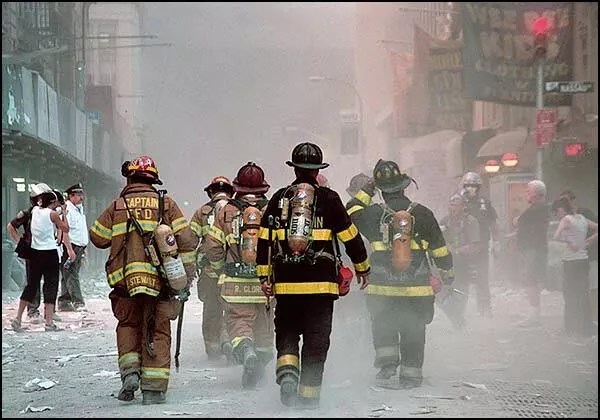
My father always set an amazing example for me to follow. Seeing his professionalism, love for his fellow human beings and devotion to the craft of being a professional firefighter solidified my desire to join this noble family. His unflinching devotion to doing so, even while watching the moonscape in Manhattan cast across his TV set, sealed the deal for me. I wanted to be just like him. I was going to be a part of his second family. It took years of hard work but I finally am a firefighter. Through thick and thin, I haven’t regretted my decision for even a second. I am humbled to come to work every day to serve my fellow citizens and work alongside and for exceptional people. However, I am keenly aware of the dangers of this profession. Now that I am a father myself, I go to work every day with the same knowledge my father had. This is a dangerous job, but with dedication, we can always make things safer so that we may all go home to our families. All the same, operations in high rise buildings still cause me to sweat.
I’ve spent a lot of my career here in San Diego in and around downtown where we have most of our high rise buildings. Incidents in these monoliths deserve our upmost respect. While I realistically believe the likelihood of seeing a 40 plus story building reduced to a pile of rubble is slim to none in my career, there is a lot that can go wrong. The logistics of getting a firefighting force to the upper stories of a fire is daunting, leaving ample time for fires to grow into unmanageable infernos. You have to tailor every decision knowing that it will be executed a half an hour from now. It’s like shooting a moving target. Safety of our crews is concerning. Our ladder trucks can only reach so high. What would happen if we were trapped by fire beyond the reach of these essential lifelines? You are exposed to infinite more danger in high rise incidents. To make matters even more complicated, every high rise is different.
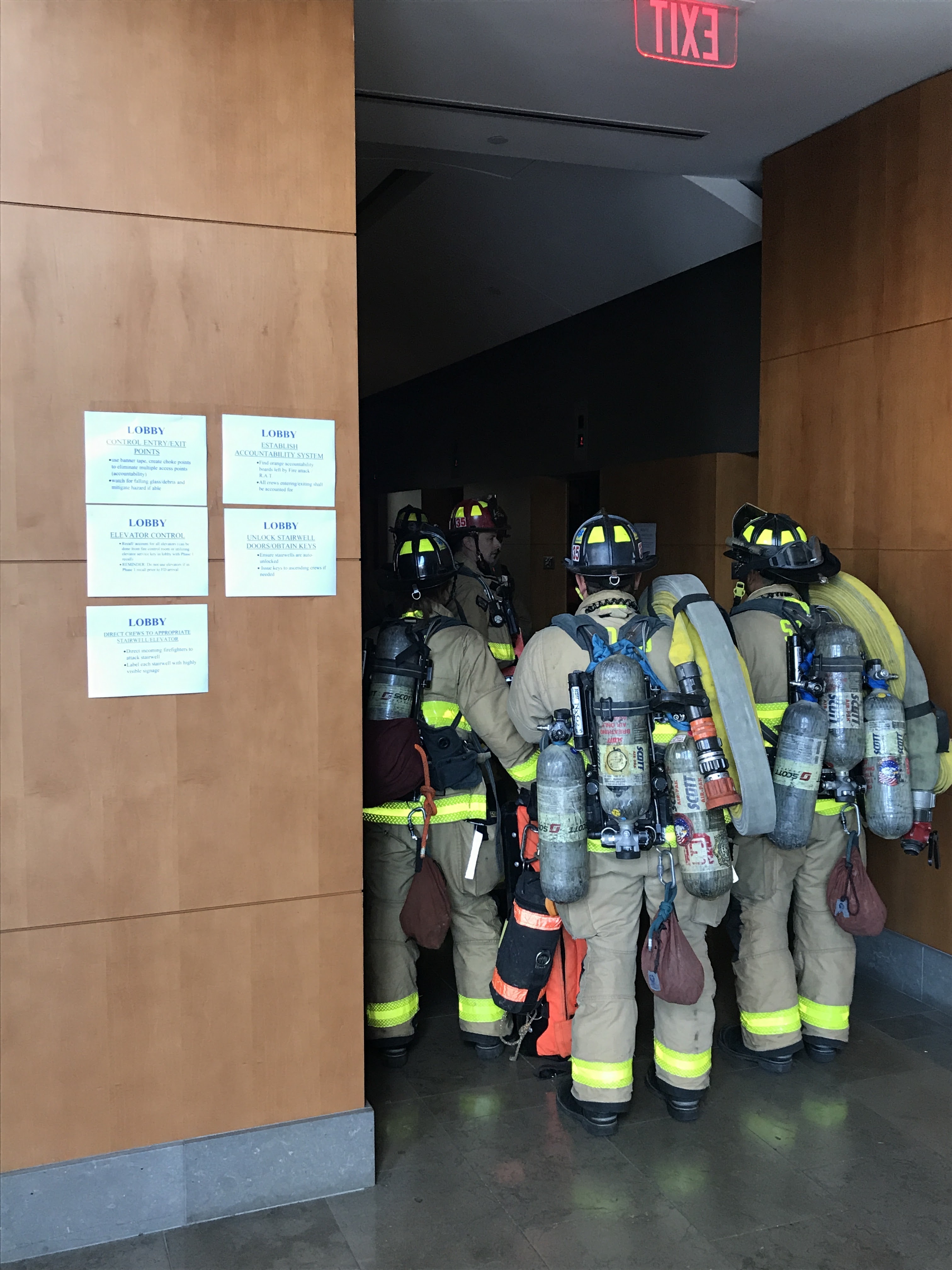
Every building is a network of complex alarm and fire suppression systems. Each one has it’s own personality and every emergency in them comes with its set of challenges. However, there are indicators in every high rise building that can make or break any operation. When we have large incidents in these skyscrapers, there is often a lot of distractions to prevent us from setting ourselves up for success. As a new fire captain downtown, I learned to look past the chaos and focus on a few key pieces of a massive jigsaw puzzle to set us on the right foot. I look at the alarm panel. Are there multiple alarms going off or just one? Is it just a heat detector or smoke detector? Water flow alarms? I look at the elevators. Elevators open on the ground floor tell me something is going on above us that caused a safety system to kick in and prevent occupants from using a potential death trap to escape to the ground level. I interview fleeing occupants to see if I can get an idea of what the hell is going on. Finally, I see what stairwell I want to make an attack from, and which one I want to direct evacuees down. The panel, the elevators, the people and the stairwells. Armed with those few bits of information pieced together, I can often make a reasonable guess as to what we will find on the fire floor and I can set the operation up for success if that is what I am tasked to do. Of course, incidents progress. New information becomes available that may shape our understanding of what can or what needs to be done. I say this all, because the chaos of running an effective firefighting operation in a high rise is never going to be a flawless endeavor. It is a lot like trying to be a successful stock investor looking at a sea of lines and bars.

This next series of blog posts will be devoted to reading basics of reading candle stick charts. Our financial markets often seem like they move in chaotic patterns. However, much like our indicators in high rise buildings, learning to read subtle cues in the flow of money between buyers and sellers can lead to reasonable guesses as to where the asset of your choosing is heading. These clues are reflected in the lines and bars of candlestick charts. Much like we read the panel, the elevators, the people and the stairwells on a fire, learning to read a candlestick chart can give you a toe hold into being more successful in your investing operations.
Firefighting and investing can be dangerous endeavors to your life and wallet if you pursue them with out preparation. A week or so after the terrorist attacks, a local news station came to our house to interview my sister and I. They asked us if we were afraid of my father going to work. The sounds of PASS alerts, tied to missing firefighters chirping under the rubble pile until their batteries ran dead stuck vividly in my mind as I tried to answer the questions in a way my friends at school wouldn’t tease me for should they catch the piece on the evening news. I honestly don’t remember what I said, but I will always remember what my father had told me beforehand. He said, “We train every day so that we stay safe and can come home. We learn from mistakes and we learn from mistakes others have made so that we don’t repeat them…and sometimes no matter how well prepared you are, things happen. When it’s your time, it’s your time. But I promise you, I will do everything in my power to make sure I never take unnecessary risk and that we (his crew) are as best prepared as possible.” I take this to heart and make the same promise today to my wife and children.
Investing my money in the stock market is a more benign endeavor, but with bills rising and my family struggling financially, I take the same risk management principles to heart to better our future. In aiding my ability to buy an investment at the right price and to have a better understanding of when to sell, I have devoted a lot of time to learning candlestick charts so that we can be better off. Thank you for bearing with me on a very sentimental post dedicated to my father, retired SDFD Captain Steve Bixler, and I hope you find the next few posts to be valuable bits of information. To my brothers and sisters in the fire service, stay safe and to all in the investing world, may you be prosperous…and also stay safe…it’s looking nuts out there.
-Thefirefightereconomist
 The Firefighter Economist
One thought on “The Candlestick”