This post was inspired by my daughter Everly on a recent trip to Sea World. My wonderful parents gifted us a pass to Sea World for the year and it has been so much fun to see my little three year old so excited to go see all the sea creatures. Of all the marine life the park hosts, shes must excited to see the killer whales, or “ORRRRRRRRCAS!” as she excitedly calls them. It’s amazing to see the world from the perspective of a child and she gets giddy to the point of shaking every time we sit down in the amphitheater to see the Orca Show. They are impressive animals, albeit with a dark past. Every time we sit down to watch the show, I think of one of our own retired captains, who may have a different take on such powerful animals.
I first met Captain Chris Barlow when he was a firefighter and I was a freshman in high school. Feeling defeated from a knee injury that prevented me from playing on my high school soccer team, my father suggested I try flat water kayaking to give my knees a break. I’ll never forget the day he drove me down to the far end of Mission Bay to an out of place seatainer at the far end of a parking lot. In the early morning mist, a small group of bundled kids and their parents shivered while listening to a pep talk delivered in a thick British, er Welsh, accent by coach Chris Barlow. My dad and I stood off to the side, while he rattled out the workout for the day. When he called for everyone to hit the water, he greeted us quickly. After some quick work talk with my dad, he turned to me and said “Welcome young Bixler, I’m going to set you up in a surfski to start this out and see where this takes you. When you tip over it will be a little more manageable.” How hard could this be, I thought. I’d been kayaking in the ocean almost all my life. It was never racing, but more touring around, but a lot of the times it was in some bigger surf. I wasn’t going to flip, I thought. Oh how I was wrong.
In the land of Olympic flat water kayaking, surfskis aren’t even raceable. They are a class of their own, more suited for open ocean races in high swells. They are designed to be aerodynamic enough, but also provide a degree of stability. The first hour of my sprint kayaking career, I promptly flipped the damn thing about a dozen times while the rest of the group flew by, doing lap after lap in space age boats made of carbon fiber. The water was so flat that morning, it looked like a mirror. I was determined to succeed. It took a few months of learning how to sneeze the right way, to turn your head without turning your whole body, and to expeditiously right yourself when you failed to keep your balance. I was then able to join the daily workouts. It was then that I learned of how damn good coach Barlow was. He could start from far back in the pack and pass you effortlessly. He would finish a workout with you and do twice the workout you did without breaking a sweat. It was after all what you would expect from a former Olympian.
I spent a few seasons with the team that held a national standing out of a humble seatainer tucked away out of sight at the far corner of an empty parking lot in San Diego’s Mission Bay. It was some of the hardest workouts I’ve ever done and a great family to be part of. Almost every workout, Coach Barlow joined us and humbled us with his speed and endurance. We traveled the state on various racing circuits and it was a lot of fun. Our team, despite it’s humble makeshift boat house, received a national standing. Racing for SDCKT under coach Barlow was an incredible journey. I don’t know why I quit such an amazing organization. It was just the stupid high schooler in me that just shrugged my shoulders and abandoned a good thing, but I will never forget the great times I had with San Diego Canoe and Kayak Team, as well as the meticulous, encouraging and absolute beast of a coach that Chris Barlow was and is. Fast forward a few years.
By the time I got onto the job, my former coach Barlow had promoted to the rank of captain. One day during my probationary year, I got to work for him. Although genuinely happy to see me, he rode me all day on the fact that I had quit his team. It was warranted, but I did every thing in my power to prove my wishy washy past as an aspiring flatwater kayaker was not correlated to my drive to be the best firefighter possible. We trained hard, ran at the park for well over an hour and responded on a handful of challenging calls. As we settled down for the evening, I made some dinner for the crew. My partner that day teased me about quitting “Lord Barlow’s” kayaking team, and then he dropped one hell of a story about the legendary athlete turned fire captain.
Before becoming a firefighter, Captain Barlow had worked at Sea World as an orca trainer. The trainers were all very athletic people, but a rare breed amongst the trainers could summon up the lung capacity to swim across the bottom of the very deep orca tank. “Captain Barlow was one of those crazy people,” his firefighter announced. Recalling our kayaking workouts, I nodded in agreement. “Well that skill came in handy, cause one day one of the whales dragged his ass all the way to the bottom,” the firefighter said. “Damn near killed him, but he was used to swimming on the bottom so he got out ok….barely…think he quit after that to become a firefighter.” I already knew what a damn stud my former coach was, but one of these firehouse legends seemed to be more truth than hoopla. I never asked him about the real story.
So back to the story about my daughter trembling in her seat at the commencement of the orca whale show we’ve now seen about a half dozen times. I can’t help to think of what had transpired in the very deep tank of frigid seawater my daughter was so excited to sit next to. I envision the struggle, the panic, and the primordial gasp for air one might have taken after being held hostage by one of those massive animals after what would have felt like an eternity. Concurrently during this thought, I thought of the financial metaphor. The Twitter finanical world was rife with stories of whale attacks. “Bitcoin down massively.” In the space of 24 hours I am down about $3,000 on my Bitcoin investments. Twitter financial accounts are bemoaning the damn whales! “On chain analysis confirms it, the damn whales are at it again!” How fitting is it, I’m sitting at the Orca Show, hearing about the attack of the whales, feeling like my crypto account is getting dragged down to the bottom of existence, just like Coach Barlow. You may be asking yourself, first of all, what the hell is a whale, and how can I survive such an attack?
The financial world is rife with animals. You have bulls. You have your dreaded bears. You have your hawks, your pigs, and your doves. Today we are going to focus on whales. Whales are entities that own a lot of a particular asset. They own so much that they can directly influence the price by buying and selling their share of an asset. They can swim peaceful in the market, content with their large holdings, or they can be the greedy monster straight out of Herman Melville’s Moby Dick that seeks to destroy the average retail investor (i.e. you and me) by manipulating the price of their holdings. Whales exist in every market, but have reached notoriety in the cryptosphere.
Their actions are simple. First they sell all of their shares on the open market at once. Many traders have stop losses set on their trades to prevent an excessive loss on a trade. It’s very much set it an forget it style trading that allows you to buy an asset with hopes it goes up. If it goes down and you don’t want to hold onto a huge loss, you set a stop loss to sell at a loss at a predetermined price to minimize the damage. Whales sell rapidly and all at once to drive the price down to stop loss levels. When a lot of accounts get stopped out at the same time, the velocity of downward price movement accelerates. It plunges. It plunges far beyond what people expect and the main stream media crys “BitCoin is dead! It’s crashing!” Panic ensues, and some weary retail investors without stop losses sell at an even lower price. The next part is infuriating.
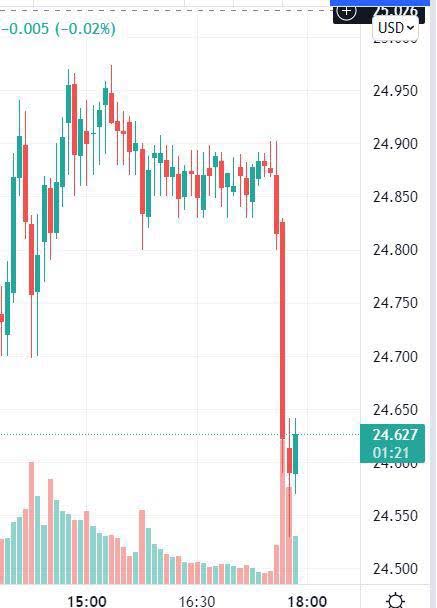
This is simplified, but it gets the point across. The whales, in their greed, essentially sold at the top that THEY set. After they essentially manipulated the price lower, they scoop up your shares, or coins, or hell really any asset victim to a whale attack at pennies on the dollar. They accumulate more shares, coins, or whatever asset they are manipulating. They accumulate more than they had before. It drives the price up. The asset may then be proclaimed as risen from the dead. Investor psychology is a very real subject that needs to be addressed here. As the price moves up, many of the same investors who panic sold, now see a new bullet train to riches and hop aboard, further driving the price up more. The whales just repeat a new attack and scoop up more of your hard earn dollars if you let them. So what do you do? I think its time to embrace swimming with the whales.
A Simple Way Of Swimming With The Whales

A Few Basic Assumptions For This Example
We are going to operate in a vacuum here. This is based on the trading techniques that I see most of my fellow firefighter investor friends taking. Of course, this blog is aiming to develop better trading techniques, and I myself try to do it better every time, but I want to start from how most people will probably trade in the beginning of their investing career. In this vacuum, you have a fixed amount of money, say $1,000 to put on any given investment, and you aren’t going to put any more into your portfolio. Also, like most of my stubborn firefighter friends, you aren’t going to sell and exit the market in the near term. Your investment horizon is in the range of 3-5 years before you wish to sell and use your new fortune to buy the newest toy or pay for that home remodel.
Enter The Market Like A Jack Ass
Chances are, if you are like me, you hear of an asset your friends are getting rich off of and want to jump aboard the train to wealth. You could look at the charts and find a good entry point based on support and resistance levels of price action. Or, like I have on many a stupid occasion, you could just blindly jump in. That’s probably not the best way to go, but say you did so. You pick any entry point and buy in with your full $1,000. You now have an average cost basis, or average price you paid for an asset. You go all in and buy your full allotment of $1,000 in one single trade. Say you catch a major move upwards. You double your money in a week! Wow this investment is awesome! You say to yourself, this thing is going to the moon! I’m never selling! But then a month later, the whales attack and now your gains are wiped out and you are sweating bullets with how much you have lost. You are like my old coach Barlow being dragged to the bottom of the tank. What do you do?
Embrace The Cyclical Markets
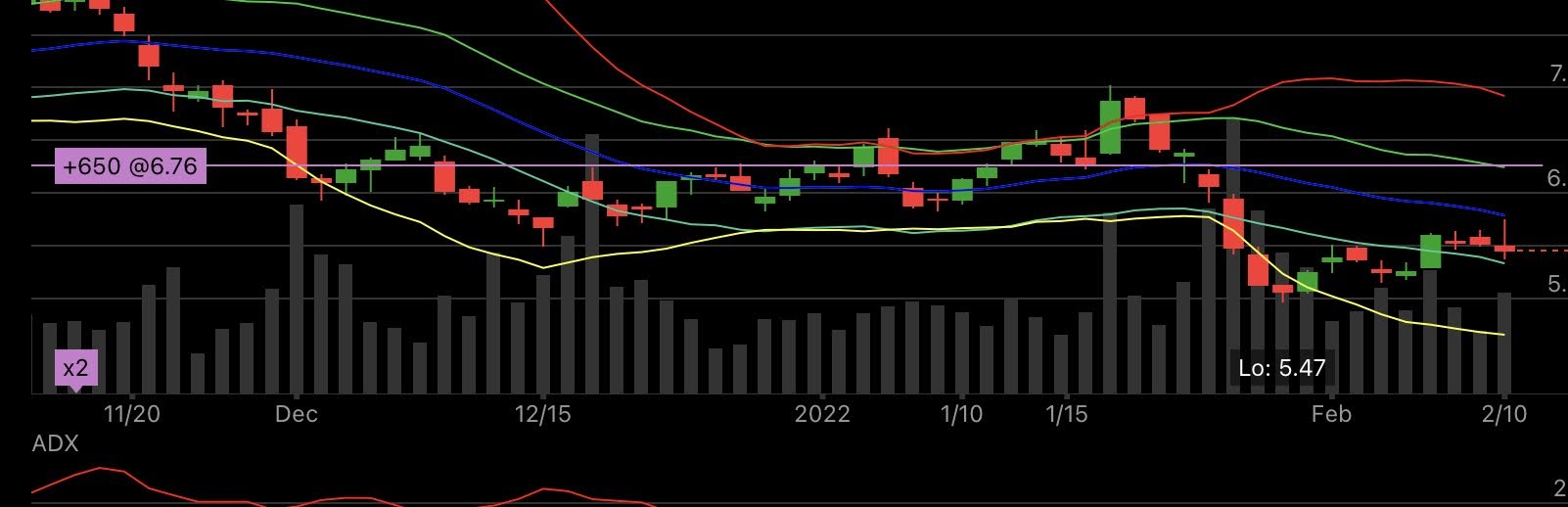
Most markets, but especially the highly manipulated markets like crypto, gold and silver, are cyclical. Sometimes its the macroeconomic factors such as inflation, jobs numbers, etc. that drive the prices of these assets. Sometimes, it is the pure manipulation factors, i.e. whale attacks. Either way, if you look at a long term trend and see the overlying value of the asset is going up over a long period of time (look at various long term time frames on an asset chart such as the 1 year, 3 year and 5 year trends), you can rest easy. Unless there is a tell tale sign of reversal, the market should go back up eventually. Set some price alerts on your phone for your cost basis. If the asset begins to creep over your cost basis, it’s time to think about acting. Until that happens, try to stay calm, AND DO NOT FEED THE WHALES! Feeding the whales is selling your asset at a lower price than your cost basis. You are just adding to sell pressure and making it easier for the whales, or hell even that mouth breather firefighter on the other division to scoop up your hard earned assets at a discount!
Back In The Green
Your phone pings that the asset is now in the green, or positive return. You are back to being profitable! Scarred from the dismal losses you’ve had before, you are at a crossroads as to what to do. Do you sell at a breakeven and lick your wounds thinking the volatile world of investing isn’t for you? Or do you decide no! You are just going to do things better this time. As that asset climbs higher, it’s time to start thinking more strategic. There are countless online forums and advice as to how high the asset will rocket up this time. It is your discretion as to who you choose to follow on this. Fortunes can be made if you accurately time the market top! But I wouldn’t pretend to be that smart or involved in this game of investing, the magic of this simple technique is that you don’t have to be 100% right on the exact price movements, especially when you have a long time horizon on you hand.
Take Incremental Profits: Build Your Dry Powder Fund
Again, this example is in a vacuum. We are assuming that you are not adding any extra money beyond your additional investment, that you by now have realized you stupidly shouldn’t have gone in all at once on. However, now that you are in the green, you are able to think a little more strategically. If that asset rockets upwards at an alarming pace, would it be wrong to take some profits along the way? Absolutely not! It is up to you to decide what an acceptable profit level will look like, but the key is to not repeat your entry strategy and take it all out at once! You may even wish to leave some of your initial investment in. The key of this phase is to build some dry powder, or cash on hand. For my own personal cryptocurrency investment strategy, I like to keep it simple and keep 50% of my initial investment in, but after that investment begins creeping above a 50% gain, I begin taking some profits to build up a dry powder fund. At a 50% gain above my cost basis I sell 5% of my investment. If I started with 100 coins, I would sell 5 of them. I sell an additional 5% up to 50% for every 10% increase after that. That money sits in my account, ready for the next whale attack. You can invest it elsewhere in something that will give you interest while you wait, or just leave it in your account to wait. Whichever you choose, be sure that it is accessible and ready to use. Sometimes I am able to sell the full 50% allotment of my initial investment, but often times, the whales attack before then. It really doesn’t matter if you have a fully funded dry powder fund, as long as you are comfortable being in a long term investment that is in an overall uptrend. Any little bit of extra funds help. And REMEMBER, the overall goal of this technique isn’t to accurately time the market, it is to simply swim with the whales and make their attacks less painful. If you reach your full allotment for your dry powder fund, sit back, relax and set your trading account to alert you to when the price gets driven below your cost basis.
Wait For The Next Attack
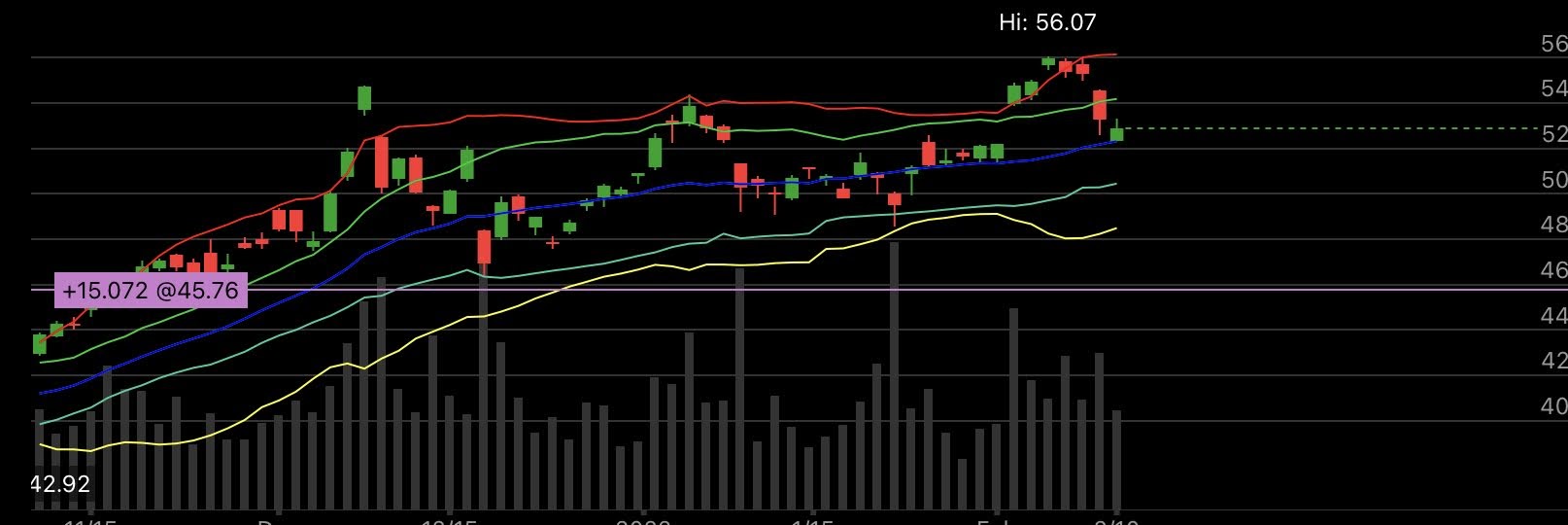
Greed will eventually come from those looking for more assets and the downward cycle will commence. I like to wait until the price drops at least below 30% of my cost basis, and then I begin a reverse strategy of my profit taking. I divide my dry powder fund up into several chunks. If I had reached my full allotment, I will choose 10% chunks, or ten separate buys. Before you begin buying, do your homework. Be sure this is in fact a cyclical move and that the underlying fundamentals of your asset haven’t changed. Essentially, ask yourself, is this a short term downtrend in an otherwise long term uptrend? The answer isn’t always obvious. Psychologically, it’s hard to buy an asset when the price is tanking. This is where it pays to have a good understanding of what you are in fact investing in. If you are firm in your beliefs, the plummeting price is actually a sale in disguise! It’s time to take action. During the carnage of a whale attack, for every 5-10% drop in price below 30% of my original cost basis, I will buy up some more of the asset. Note I said original cost basis, because after your first buy, you will see the beauty of this technique. Note, your cost basis decreases to a new lower cost basis. With each subsequent draw down in price and each subsequent purchase, your cost basis gets less and less in value. In other words, the average cost you pay per coin, share, or whatever unit your asset is measured in goes down. If the price begins creeping upwards and is still below your new cost basis, you can still buy more to lower your cost basis, but the desired effect won’t be as pronounced. As the price creeps up to your new cost basis, you now own more of your precious asset at a cheaper price, all paid for by your initial one time investment.
The Next Steps
Where do you go when the price goes back up? This is a tough answer, because you will be profitable sooner due to your lower cost basis. For the first few cycles, I like to use my original cost basis as a guiding factor to determine when I should build up my next dry powder fund for the next whale attack, and I follow my original rules based on that number. To recap, above 50% profit off my original cost basis, I sell 5% of my asset for every 10% increase. I may up the percentage above my original cost basis a bit, maybe 60% above. This is due to the longer term trend being in an upward movement. I would be expecting a higher high price in the next cycle. On the down turns, I use my new, lower cost basis as a guiding factor of when to buy, but I may buy a bit sooner than a 30% drop below this number, maybe 20% instead. Again, this would be consistent with an up trending asset in the long term, showing a higher low point. It will take a few cycles of up and down to really see a noticeable difference in your cost basis, but eventually, you may find buying opportunities difficult. That is a good sign! It means you own an asset a great price. It is a price that is more resilient to whale attacks. In fact, you are now swimming with the whales, picking up assets closer to the price they are with every successive cycle you follow their attacks. If you have stayed disciplined and reached this point, you have learned the importance buying low and selling high! It’s a simple technique that requires almost no technical knowledge, and given enough time has you well positioned in almost any asset, no matter how bad you botched your entry point during your first buy.
An Alternative, Even Lazier Strategy That Works…
Perhaps you don’t even want to figure out percentages of profit taking. Simply utilize the dollar cost averaging strategy. When the price is above your cost basis, set a sell schedule for your assets with an expiration time frame. For instance, as long as the price is above your cost basis, sell 1% of your portfolio each day for 50 days and then stop. As long as you keep checking to see if the price is above your cost basis, you are taking profits to 50% of your portfolio. You can change the percentages withdrawn and the time intervals. It’s all your choice. When the price dips below your cost basis, dollar cost average buy using your dry powder fund on your set interval until you run out of funds. Though not as effective, it is still an easy way to get your cost basis lower.
A Step Further: Cash Flow Your Lower Cost Assets
Eventually you won’t have to sell your assets and conduct this cycle if you don’t wish to. When you have reduced your asset cost basis, you open up the possibilities of cash flowing your assets for significant returns. The simplest way in stocks is to collect dividend payments. The crypto equivalent is a staking reward. If a stock offers a 3% dividend, its 3% based on the current price of that stock at the time they announce a dividend. Say you bought a stock at $20 a share, but over the years were able to utilize the technique of swimming with the whales to get your average cost basis down to $10 a share. Now the stock is trading at $100 a share and is issuing a 3% dividend. You will be getting $3 per share on a stock you own for $10. Every one who bought the stock at $100 will be getting a 3% return on investment, but you will actually be getting a 30% return rate ($3/$10). You could also consider selling covered call options against your stocks. As long as your contract is above your cost basis, you will always be profitable. You can sell a far out of the money call option against your stock. This means there is less of a chance your option will get assigned away (i.e. you will be forced to sell your stock). You will have a lower premium, but with a lower cost basis, this will still amount to a significant return on investment. With a lower cost basis, you have a ton of options to make money on your investments without having to sell your assets.
In Closing
Retired captain/coach/former Olympian/former orca trainer Chris Barlow’s harrowing firehouse legend serves as a great analogy to investing in assets subject to manipulation by whales. Arguably he survived his experience because he was well conditioned to take an unwanted trip to the bottom of the pool. This conditioning didn’t happen overnight. It took hard work and patience on his part. In the investing world, you too can condition your portfolio and lower your cost basis. Not only does this lower your threat to whale attacks, but it also opens up your options immensely to cash flow your investments and build wealth faster. I repeat, this does not happen overnight. There are far better techniques should you wish to study and learn the world of technical analysis of whatever markets you wish to pursue. However, following these techniques over time on assets that are in an overall uptrend will build you a more resilient asset base without needing to spend a lot of energy or stress too much. I wish you all the best in your investing career. DO NOT FEED THE WHALES!
 The Firefighter Economist