For me climate change has affected me personally…and no I am not about to go Greta Thunberg vs. Trump on you. Much like my hatred of the armchair quarterbacks of the YouTube fire scene, I firmly don’t believe that there is sufficient evidence to point the massive finger at one contributing factor. I’m not going to go on a rant about reckless personal consumption, corporate greed, abject pollution, or conversely liberalization of the scientific community to promote a doom and gloom narrative bent on a “Great-Reset, New World Order….”conspiracy theory. I’m just not that kind of person. There are studies out there that can literally promote any side you choose of the climate change debate, so why bother arguing a point?
Does anyone know with absolute certainty how to navigate the complex interconnected webs of human and natural born feedback loops that affect global climate on a yearly, decade long, or century-based basis? I certainly don’t. I’m just going to leave it as this…for me, I have been directly affected by “record setting” weather events, and I have personally invested in myself and in my portfolio to respond to one of the more serious and controversial issues of our lifetime because I’ve seen and felt the destruction of where we are headed as a species. This might not be very popular, but I’m doing all this in hopes of making some money AND leaving this world a little bit better for my kids. Let’s face it, I have bills to pay and I want my children to be happy. This isn’t at all altruistic. Perhaps it’s a bit selfish. However, if making money results in reducing the effects of climate change and helping those affected by record setting weather events caused by climate change, I don’t see how this could be wrong. Whether you believe in the issues or not, there is money to be made fighting this very real or very fake threat. More and more, I believe capitalism will combat climate change better and more efficient than any government mandate or really any other force in this world.
Why this is personal
By all accounts, especially those on the left leaning side of the political spectrum, climate change is like a freight train. It has started off slow and after gaining speed will inevitably be a unstoppable force that will wreak havoc on everything that lies in its path. While this eventually may be true, I like to think in probabilities. Climate change increases the probability of more severe weather events. In 2002, I attempted to climb Denali, North America’s tallest mountain. I was 14 years old and joined a commercial climbing expedition with my father who supported my mountaineering addiction. It was a great trip until a “larger storm than we’ve ever seen,” blew into our camp and trapped us at 14,000 ft. for two weeks. We almost starved and after weighing out the danger of being buried alive in an avalanche or wasting away due to undernourishment, made the decision to make a dangerous retreat down the mountain to safety. The next year, I made another crack at the mountain, this time working as an apprentice mountain guide for the same commercial company. Low and behold, the weather could get worst and we again got stuck in another unprecedented storm. This time around there was less snow, but it was colder and windier. Up until that expedition, I never knew it was possible to be flown into the air by the wind. Being a human kite isn’t fun and I’m lucky to be alive. I’ll leave it at that. Picking up bits from the other guides in camp, this wasn’t normal weather for that time of year. Neither was the retreating glaciers farther down the mountain that we eventually had to navigate. Two record storms two years in a row? What are the odds?
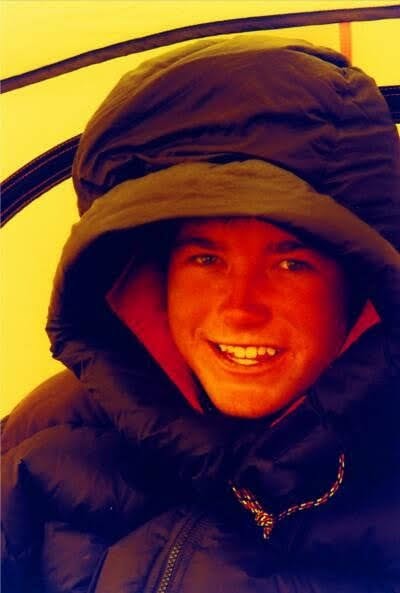
Happy to be alive after a retreat through the storm. Denali 2002 
A precarious retreat through the storm in white out conditions and 65 mph winds. Denali 2003
Fast forward a few years and I am getting ready to go to school at UC Davis. My parents were in the unfortunate process of separating, and the finances of the family were in disarray. My father had sole control over my college account and the first payment was due. The only problem was Hurricane Katrina was bearing down on New Orleans, and California Task Force 8 Urban Search and Rescue Team was making their way to help in the rescue efforts. In a land before smartphones, Hazardous Specialist Bixler could only hope that he could get back to a bank in time to pay the bill, and then get back to San Diego in time to drive his son to college. I don’t know how my dad was able to respond and get back just in the nick of time, but I’ll always be incredibly thankful. During the 8 hour drive from San Diego to Sacramento, I learned the horrors of what broken infrastructure met with a horrific weather events yield, and it didn’t sound pretty. I could tell he was disturbed by what he saw, but also thankful for opportunity to help. That is the life of a first responder. We see things we wish with all our hearts to forget. We remain thankful for the opportunity to help those who are victims to it.
After graduating college, I realized the world of economics and finance wasn’t for me. I wanted to be the person responding to the emergencies of the world. Being a firefighter seemed adventurous and rewarding and I put all my heart into it. In hindsight, I took the first step in investing my time to respond to climate influenced events. My fellow firefighters and I stand ready to respond to all hazards including the record level wildfires plaguing our state this summer. In recent years, I went a step further and invested in getting the training to secure a position on CATF8. This is the same California Task Force 8 USAR team father was on, and I serve as a Rescue Specialist, boat operator and rescue swimmer. We can respond to any FEMA level emergency nationwide. Overall, I am lucky to have the opportunity to be able to respond if needed, to all major natural disasters, including climate change caused weather events. It is rewarding work born of unfortunate circumstances.
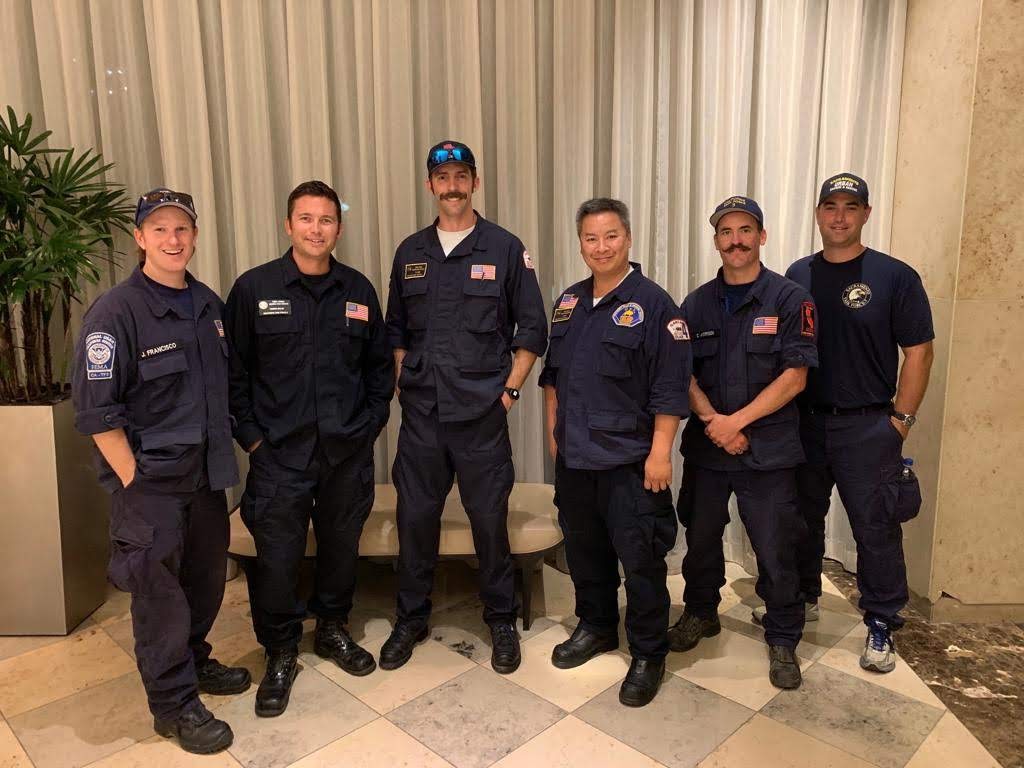
UC Davis Fire Alumni serving with their respective USAR task forces deployed during Hurricane Dorian (2019) 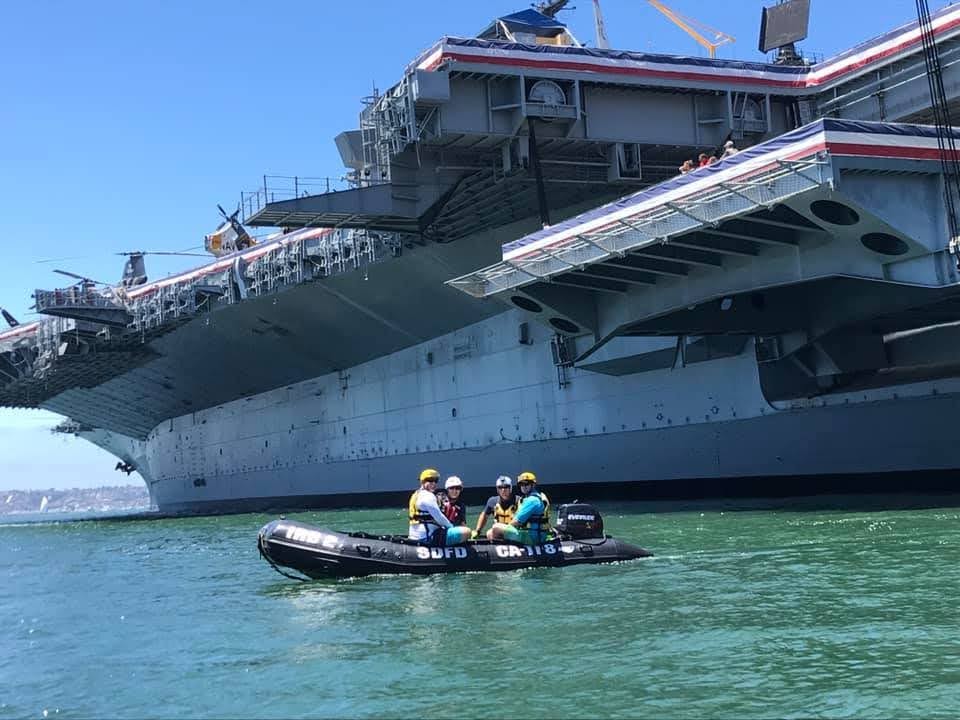
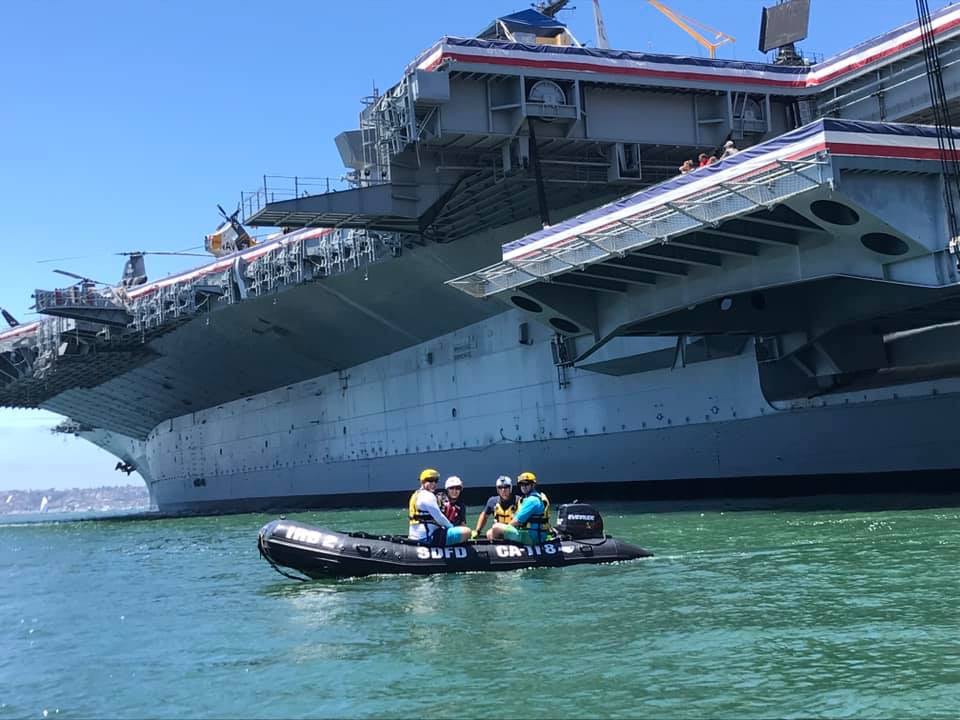
USAR Boat Operations Training San Diego Bay
The Capitalist Solution
I’m not here to argue that imposing massive government intervention might stem the tide of human cause global Co2 emissions, I just want to say that fundamentally I don’t think such impositions would be effective in the long term. I see the massive challenge of government imposed COVID lock downs as a prime example of how forcefully trying to stop human nature in the name of humanity just falls flat on its face. If you don’t see the death and destruction of a crisis in your backyard, it’s human nature not to pay attention until it’s too late. I’ll use the complete and utter stupidity that I have responded to over the last 14 years in the fire service as solid evidence for my own personal opinion in the matter, but please have your own opinion. Furthermore, I don’t think harsh government interventions in emissions controls and environmental constraints combined with half assed regulatory procedures is really going to make a huge difference.
Now, can we switch the paradigm and reward good environmental behavior? Can we incentivize clean energy and corporate steps to leave this world better than we found it? Yes we can! And we can get rich by investing in the companies that do so…Enter ESG, green bond and net neutral investing. In future posts, I will go head first into all of these, but my goodness, I have stumbled on some crazy awesome stuff online and I am intrigued. In a world of inflated asset prices, record setting weather events, social unrest, death and destruction, who wouldn’t want to get rich while possibly making this world a better place for our children. Sign me up!
If there is one name you need to know in this “Carbonomics” game, do yourself a favor and listen to and read everything Marin Katusa has ever published. The man is well tapped into the commodities sector and runs his own Katusa Research Firm. After reading his latest book The Rise of America, I was so impressed, I subscribed to his monthly newsletter. I see his knowledge as an incredible investment. It’s like Warren Buffet value investing meets the commodities world. His stock picks seek to pick up great companies geared towards resources, carbon sequestration and clean energy. He figures out what are are the bargain prices and he then uses the analogy of an alligator in his investment strategy. “Alligators don’t chase their prey, they wait for it to come to them.” Thus, you might wait awhile, but you buy the stocks when they are on sale.
Katusa’s investment strategy isn’t earth shattering (buy low, sell high and reduce risk), but his vision of the future is. He see’s the carbon credit market overtaking the oil industry in market cap. It’s a huge statement, and the investing is in it’s earnest days. While there is still time, I am cautiously treading into developing my portfolio based on his research and will also seek to add other companies that keep the environment on its balance sheet.
In summary, the world may be going to hell and a hand basket with rampart economic insanity, record breaking weather events, government overreach, and media manipulation. I am thankful for the opportunities my career has and will give me in helping combat climate related emergencies, and I am excited to see and invest in the future of “Carbonomics,” ESG, and green energy. I’m looking forward to seeing where this investing path goes. More to follow!
 The Firefighter Economist