Every year in July marks our preparations for wildland season. This time of year, we also get ready for the new fiscal year in the City of San Diego. This year, L145 and city leaders have reached an agreement for a small pay raise. However, almost simultaneously, SDCERs retirement system has increased the contribution rates required to keep the pension system running smooth. For some, this has almost eliminated the well deserved pay raise. The members are understandably frustrated at this “going nowhere fast” scenario. Although I’d like to keep my pension AND my pay raise, I see the contribution rate increase as a necessary step in staying financially sound. I want to dive deeper and attempt to understand my gut feeling that paying more is necessary. I will attempt to explain the increased challenges of investing for a defined benefit pension and the importance of conservative fundamental rules towards investing. It reminds me a lot of our changing wildland fire arena and the importance of safety principles such as the 10’s and 18’s.
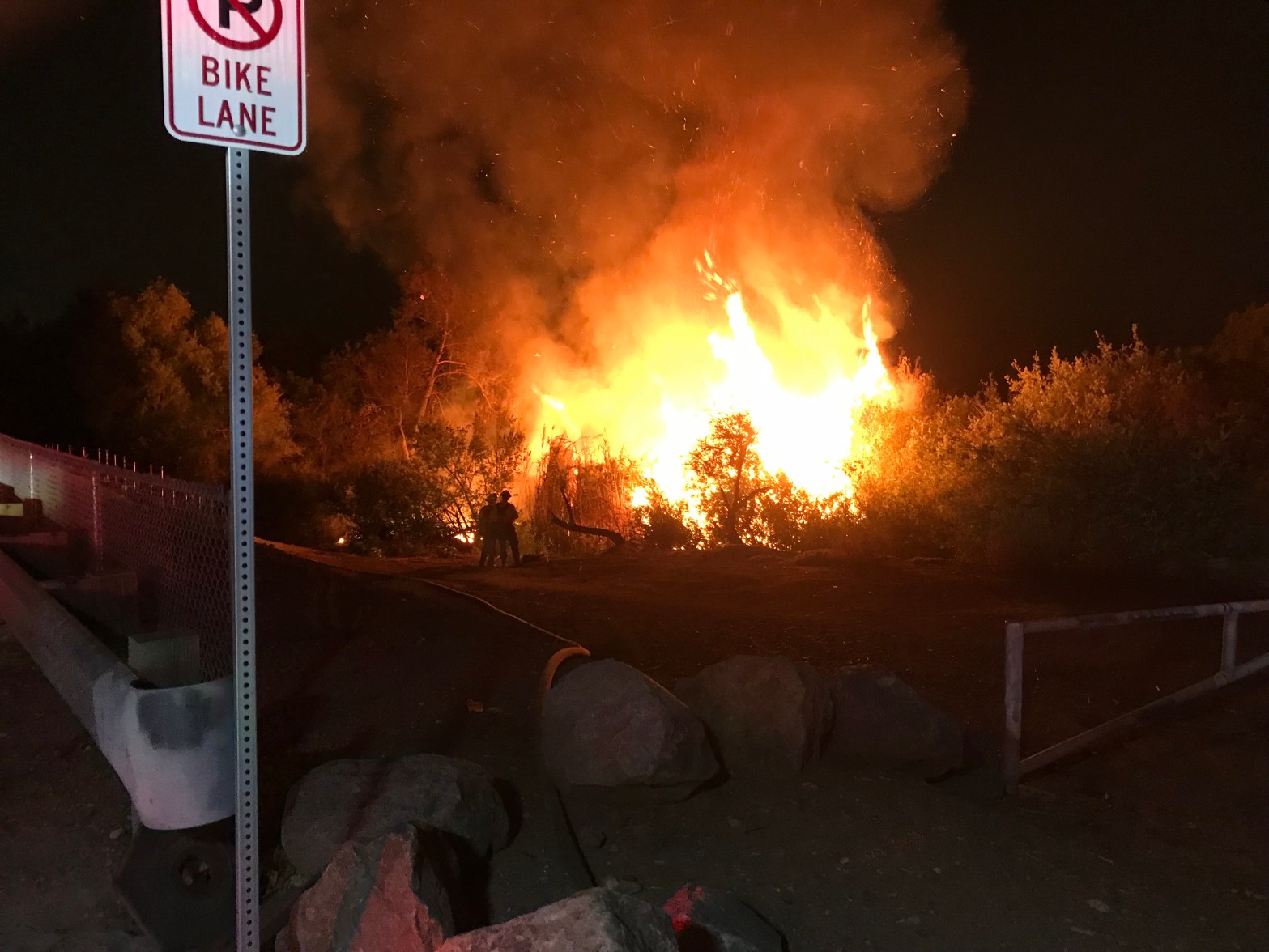
In the wildland arena, we are seeing faster fire spread, more extreme fire behavior, and little warning time to evacuate communities. Our time tested tactics for containment are being challenged more and more every fire season. In recent years, we can command a fleet of helicopters and DC10 jets to drop fire retardant with precision. We can call up armies of strike teams, incident management teams, and single resources in the State’s Mutual Aid System. Millions in emergency dollars can be spent to stomp these fires out of existence, yet we are loosing whole towns. Also, we are killing firefighters at an increased rate in not so freak extreme fire events. What is happening? The environment is changing, and despite the best technology and personnel money can buy, it might not be enough. The 10’s and 18’s are now more important than ever.
The 10’s and 18’s have served as time tested principles to keep wildland firefighters safe. They are recited and memorized by all new firefighters and ingrained in the veterans, yet they are broken on a daily basis. In order to protect life, property and the environment effectively, it would be impossible not to. In the balance of risk to reward it comes down to asking yourself, “How many of these 10’s and 18’s am I violating, and am I ok with that?” In a world of ever increasing fire danger, and the necessity to bring everyone home safe, the answer will increasingly be fewer violations. With this conservative approach, we may need more resources and conservative tactics to ensure every one comes home. To do more with less would be to increase our risk tolerance. Should we travel down that path, the potentials could be disastrous.
In our financial markets, we too are experiencing a rapid and volatile change in our environment. Traditional defined benefit pension funds, such as SDCERS typically seek a real return rate of 7% on investments. Up until the Great Recession of 2007-2009, this was pretty easily achieved by investing in a portfolio something like 10 year bonds, blue chip stocks, and real estate. When all of the markets began to melt down, the Fed began a program known as Quantitative Easing, or QE. Essentially they injected money into the financial systems to fund the purchase of struggling assets. With so much money in the system, the cost of borrowing money plummeted to all time lows, and the stock market subsequently boomed into all time highs.
This boom works great for every employee under a 401(k) style pension plan…for now. With access to cheap money, stocks owned by hedge funds posted and continue to promote super high year over year gains, fattening the net worth of the millions of savers in retirement funds across the nation. We may ask if this will last forever and why isn’t SDCERS getting in on the action? Investor and financial educator Robert Kiyosaki doesn’t think so. In his book “Rich Dad’s Prophecy,” he brings up a harrowing prediction of the future. Kiyosaki speculates that the baby boomer generation and every other subsequent generation is in big trouble in the stock market.
The Employee Retirement Income Security Act of 1974 (or ERISA) essentially moved a vast majority of pension systems from defined benefit to defined contribution. In a nutshell, a guaranteed retirement income got replaced by a monthly check dependent on the performance of the stock market. If you didn’t save enough, or there was a big market crash, you could be screwed in your golden years. At face value, if you saved enough and the markets did well enough, you could be OK, but what happens if everyone in your generation decides to retire at the same time? To collect an income stream, you have to rely on stock dividends and/or sell some shares of stock. What happens when there are more sellers than buyers? What happens when a whole generation starts selling at once? It’s a basic law of supply and demand, that when supply exceeds demand, prices will drop. If they drop too fast, panic could set in and everyone will exit sooner than later, leading to a market crash. The big question is, what happens if the market crashes this time around?
This time around would be a perfect storm for a whole generation of Baby Boomer retirees. Many people near retirement age are realizing that a backup plan of Social Security benefits are not a reliable source of supplemental income. I think the government and the Federal Reserve realizes this too, and in order to keep a whole generation of retirees propped up, along with the infrastructure of our country, they are spending money like crazy and expanding the monetary supply to pay for the bill. This is leading to inflated stock prices. It is in the government’s best interest to keep a whole generation out of abject poverty, and if you are a younger investor in the stock market, exploiting this is an incredible way to make an immense amount of wealth fast. Essentially almost every stock and ETF is going up in nominal terms! However, all this money printing and buying up assets is creating a supercharged environment for a massive correction and the negative consequences are already showing.
The number one concern for me is inflation. Yes, the stock market is cranking out some amazing returns, but CPI, or consumer price inflation is rising fast too. All this money printing is leading to record low interest rates, record high asset prices (housing, stocks, etc.), and pathetic returns on 10 year bonds. Essentially, the portfolio of conservative investing required for slow, steady, and reliable growth that our defined benefit pension fund needs isn’t nearly as effective as it once was.
We are left at a fork in the road. Do we gamble our retirement fund away in the circus that is the S&P 500? Or do we spend a little bit more to purchase time tested and safe assets that will carry us into a guaranteed retirement albeit at a bit higher price due to inflation and the fact that we are living longer. Personally, the answer for me is a resounding rush for the conservative fork in the road. However, for full disclosure, I have a 401(k), deferred comp 457(b), ROTH IRA, brokerage account and several crypto accounts that I invest a bit more aggressive in. I see both conservative and higher risk/higher reward investments as a good balance towards my retirement. Should the financial system implode, paying a bit extra in insurance now, for a guaranteed pension later is worth it every day in my book. That’s just my view.
To bring it all back together, I see our brush fires environment changing like our financial markets. They are both churning up unexpected curve balls at an increasing rate, and people are literally and figuratively getting killed because of it. Adhering to the 10’s and 18’s with upmost discipline keeps us safer, even in the most extreme of fire behaviors. Similarly, SDCERS upholding the same conservative investing principles ensures our retirement checks keep clearing until the day we die. In these crazy environments, this safety comes at a cost. On the fire ground, we will order more resources when available and when it comes to my retirement, I will happily pay a little more to shield from this market insanity. This are my initial thoughts. My hope is to better understand the pressures faced by our SDCERS retirement board. I will continue to add more to this pension section as I study more into this. My fellow academy mate and SDCERs board member Paul Lotze has reached out and given me a wealth of information to sort through to build an even more airtight case, and once I digest it and can feel comfortable understanding and explaining it, expect more posts like this. Either way, be safe out there and may you be financially well.
 The Firefighter Economist
Great use of examples. I like how you made economics easier to understand.
LikeLike